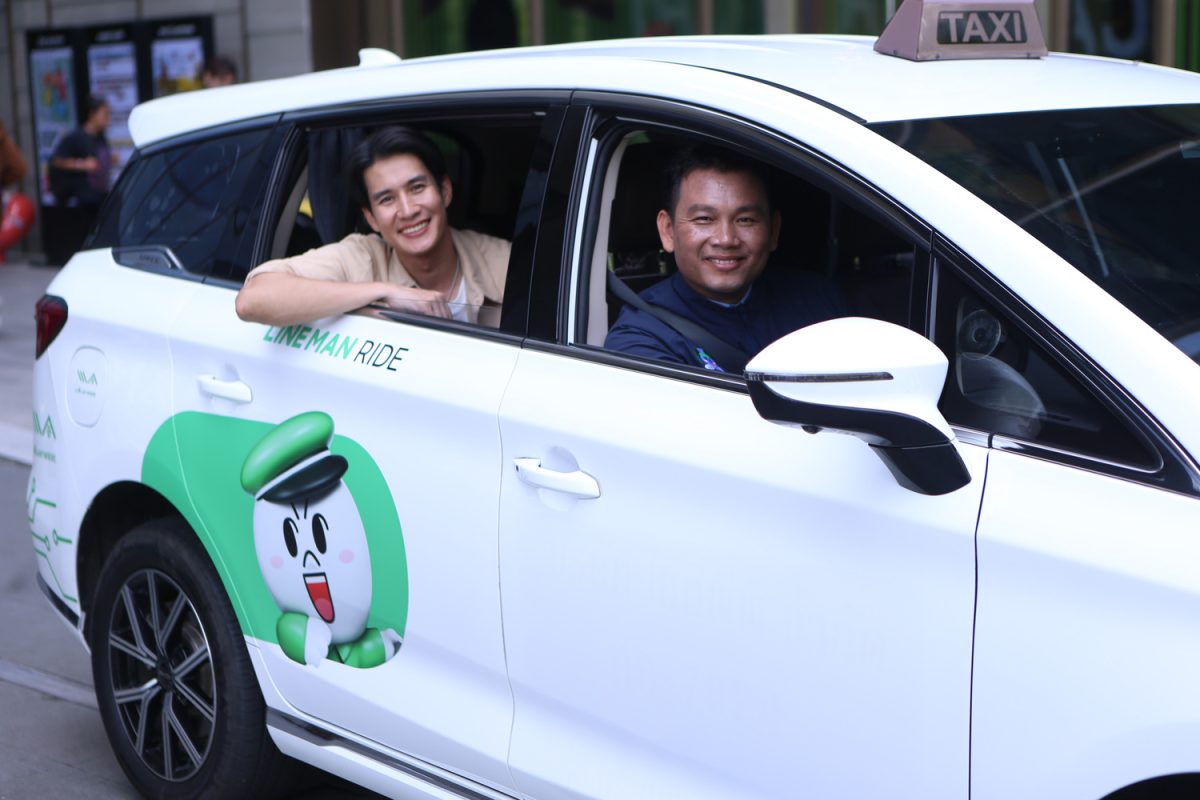
Yod Chinsupakul, CEO of LINE MAN Wongnai, stated "A key structural factor for the long-term ride-hailing business is having a quality driver network that can build a sustainable career on our platform. We chose to invest in reducing driver costs through an EV rental model. Lower costs lead to a real increase in net income for drivers, while passengers receive better service. This approach creates a balanced EV ecosystem that benefits drivers, passengers, and the platform.
After launching the EV ride-hailing service in July 2025, LINE MAN RIDE rapidly expanded its EV fleet within just 10 months. Building on this momentum, LINE MAN is expanding partnerships with EV fleet operators. The company intends to add over 3,000 certified EV drivers by the end of 2026. To ensure safety standards, LINE MAN also helps drivers get public driving licenses required by the Ministry of Transport.
At the same time, we must grow passenger demand to balance driver capacity by piloting 'Comfort,' a new service category on LINE MAN RIDE. This expands our existing ride-hailing options of taxis, private cars, and motorbikes. Passengers can now select large, spacious, and comfortable electric vehicles (EVs) at affordable prices. The service is piloting in parts of Bangkok and its suburbs before gradually expanding. Due to high usage retention driven by a great passenger experience at reasonable prices, we are confident that EV ride bookings via Comfort feature will grow 10 times by the end of 2026 compared to the pilot period in July 2026."
Data from LINE MAN RIDE shows that lowering operational costs is essential for increasing driver earnings. EVs reduce fuel costs by more than 60%, or an average of 7,000 Baht per month per vehicle, compared to internal combustion engine (ICE) cars. This results in a net income increase of over 30% compared to traditional taxi drivers. To make EVs more accessible, LINE MAN developed a full-time rental-to-own model with a starting budget of just 4,000 Baht. The program guarantees a minimum income for drivers who meet the conditions, assists with public driving license applications, and offers vehicle ownership after 6 years of renting. Currently, LINE MAN RIDE partners with EV fleet operators to lower entry barriers, allowing individuals without vehicles to start driving immediately while building long-term infrastructure for the EV Ecosystem.
Sila Udomsomboon, a LINE MAN RIDE driver partner who has driven an EV since the early stages, shared: "In the beginning, I drove from early morning until late at night. After learning from LINE MAN RIDE driver coaches and understanding passenger behavior across different locations and times, I shifted to a strategic approach. For instance, I pick up office workers, medical staff, and students in the Silom-Chula area in the morning. In the afternoon, I move to Lat Phrao, Ram Intra, and Ramkhamhaeng. In the evening, I target suburban areas where parents pick up their children and commuters return home. This allows me to work fewer hours but earn more income because I am no longer driving aimlessly. The higher earnings come from efficient cost management and strategic trip planning."
Beyond boosting driver income, expanding the EV Ecosystem creates positive environmental impacts. An EV on the LINE MAN platform drives an average of over 5,000 kilometers per month, reducing greenhouse gas emissions by approximately 0.75 tons per month per car. To date, LINE MAN RIDE has cut cumulative CO? emissions by more than 3,500 tons, equivalent to removing over 750 cars from the road for an entire year.
In addition to expanding the EV network, LINE MAN RIDE continues to improve the travel experience under the "Affordable and Safe" concept. It features localized tools such as Chat Stickers for driver communication and QR Payment. For safety, the platform provides real-time Trip Tracking, driver background checks, insurance for both drivers and passengers, and an anonymous rating system. The application is fully certified by the Department of Land Transport.