In Thailand, the chocolate confectionery industry is projected to reach USD 332 million by 2030, growing at a CAGR of 5.3% during 2025-2030 This expansion is fueled by premiumisation, gifting culture, and e-commerce growth. Rising cocoa costs push manufacturers toward smaller, portion-controlled formats and premium cues. Brands protect margins through layered textures, nut inclusions, richer flavours, and gift-ready presentations, positioning chocolate as an accessible luxury for urban consumers.
Thailand's boutique chocolatiers and sustainable enterprises are embedding local cacao, artisanal craftsmanship, and eco-friendly packaging into their offerings. Homegrown companies like Siamaya Chocolate, Kad Kokoa, and PARADAi Chocolate produce single-origin, handcrafted, and terroir-inspired chocolates. Their emphasis on direct farmer partnerships, transparent supply chains, and sustainable cultivation demonstrates Thailand's growing role in community-driven innovation. But this drives the question: how can Thailand secure a future proof chocolate industry growth?
Women's Initiatives against Threat of Land Conversion
Thailand can look to neighboring models like Indonesia, where the cacao landscape relies heavily on local communities. Pejalin Village in Tanjung Palas District, Bulungan Regency, North Kalimantan, offers a compelling example. Here, village women act as both business leaders and guardians of vital water springs through sustainable cacao processing.
Pejalin Village stands at an ecological crossroads. Pressure for oil palm expansion is mounting, with palm plantations in the region reaching 5,000 hectares, vastly outnumbering cacao at around 1,000 hectares. Yet, cacao does more than support the local economy; it serves as a protective canopy for vital water springs.
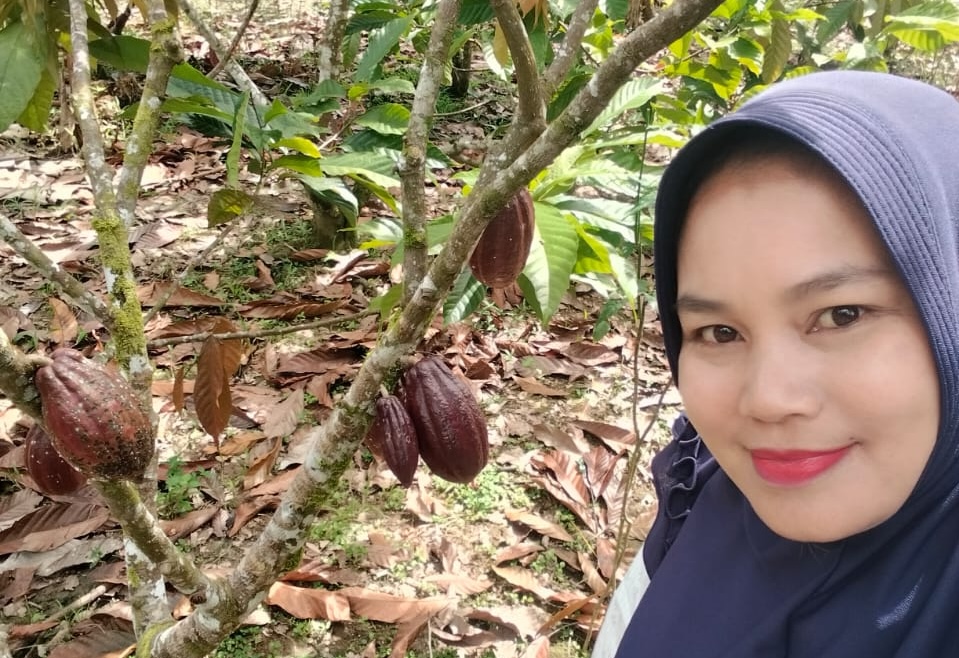
Driven by this ecological concern, the Kita Merong Joint Business Group (KUBE) was established. Led by 38-year-old Mardiatin, who is also known as Ibu Yen, the group consists of nine local women. While they initially focused on fisheries, their momentum shifted in late 2023 when Pejalin Village received funding from the Ecological-Based District Budget Transfer (TAKE) for green economic development.
"At that time, cacao existed in the village, but it was mostly taken by outsiders at low prices. Farmers were losing their spirit. We thought, if we could process it right here in the village, the value would be entirely different," said Mardiatin.
With village government support, the group was appointed to manage cacao processing equipment in March 2024. They learned the trade from scratch, covering everything from bean selection to tempering. Cacao, previously sold only as a raw material, is now positioned as a strategic Non-Timber Forest Product (NTFP) and a form of village resistance against oil palm expansion.
"If cacao has value and farmers can live off it, they won't easily abandon their gardens. This is also about protecting our water and soil," she said.
Quality Standards Through Capacity Building of Local Supply Chain
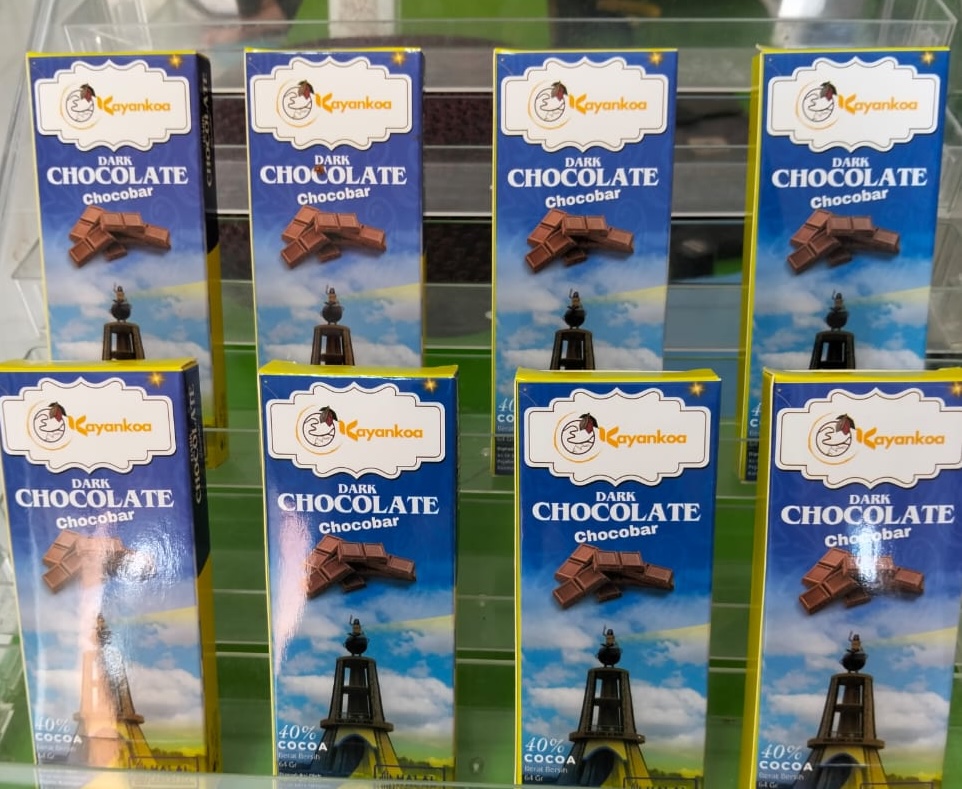
Through KUBE Kita Merong, local beans are transformed into value-added products under the brand Kayan Koa. Five core members manage daily operations, processing an average of 10 kilograms of dry beans daily, with monthly production reaching approximately 300 kilograms.
The production flow begins with careful bean selection, followed by roasting for approximately 25 minutes per kilogram. The roasted beans undergo winnowing to separate the husks from the cacao nibs before grinding. Finally, the group extracts their own cocoa butter using a press machine to create dark and milk chocolate bars, cocoa powder, and 3-in-1 ready-to-brew products. This makes Kayan Koa one of the few MSMEs in Bulungan to process cacao entirely from upstream to downstream.
"What differentiates us is that we process all the cacao ourselves until it is finished, not just the chocolate bars. The powder and the butter are also from here in Bulungan, so the taste is consistently authentic," said Mardiatin.
However, challenges remain. Many farmers view fermentation as too time-consuming, choosing to sell beans unfermented for quick cash, which threatens flavor consistency.
"We do not dare take unfermented cacao because it greatly affects the taste and quality. Therefore, we must also provide education and insights to farmers so that the processing is correct," said Mardiatin.
To address this, KUBE Kita Merong partners with the National Research and Innovation Agency (BRIN) for online training and field fermentation experiments. Furthermore, students from the Universitas Kaltara (UNIKALTARA) in North Kalimantan are conducting research on white chocolate and repurposing cacao husks into tea to build business resilience.
Restorative Economic Impact, Employment, and the Hope for Cacao Preservation
The presence of Kayan Koa has brought tangible changes. Beans are purchased from Pejalin farmers at stable prices ranging from IDR 80,000 to IDR 90,000 (approx. 180 THB to 200 THB) per kilogram. For the group, monthly turnover has surged from an initial 3 to 5 million IDR (approx. 6,700 THB to 11,200 THB) to approximately IDR 16 million (approx. 36,000 THB).
The venture has also created jobs for local women and youth aged 24 to 27, who assist during peak orders. Kayan Koa products are now available in souvenir shops and local minimarkets, and are featured in national exhibitions with support from the regional government and Bank Indonesia.
"Women in the village now have a role, an income, and are involved in development. My hope is that our production house can soon be fully established and that we can deepen our processing training so the quality remains consistent," she said.
PINUS has also been working to elevate these stories to the national stage. Through civil society networks and digital platforms, the story of KUBE Kita Merong is published on eftindonesia.org and presented at forums like the 6th National Conference on Ecological Funding to advocate for local community initiatives.
The Kayan Koa initiative proves that a restorative economy is achievable. Through women-led cacao processing, economic value is cycled back to local farmers, water sources are preserved, and new opportunities are unlocked for the younger generation.