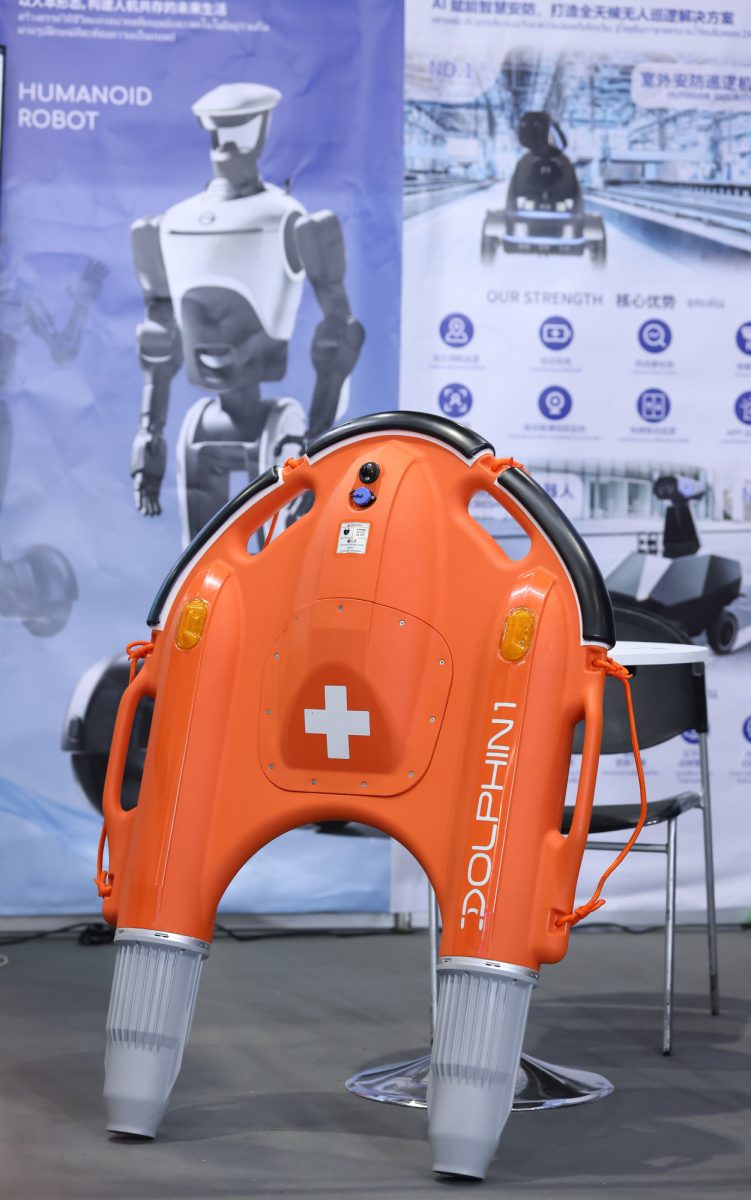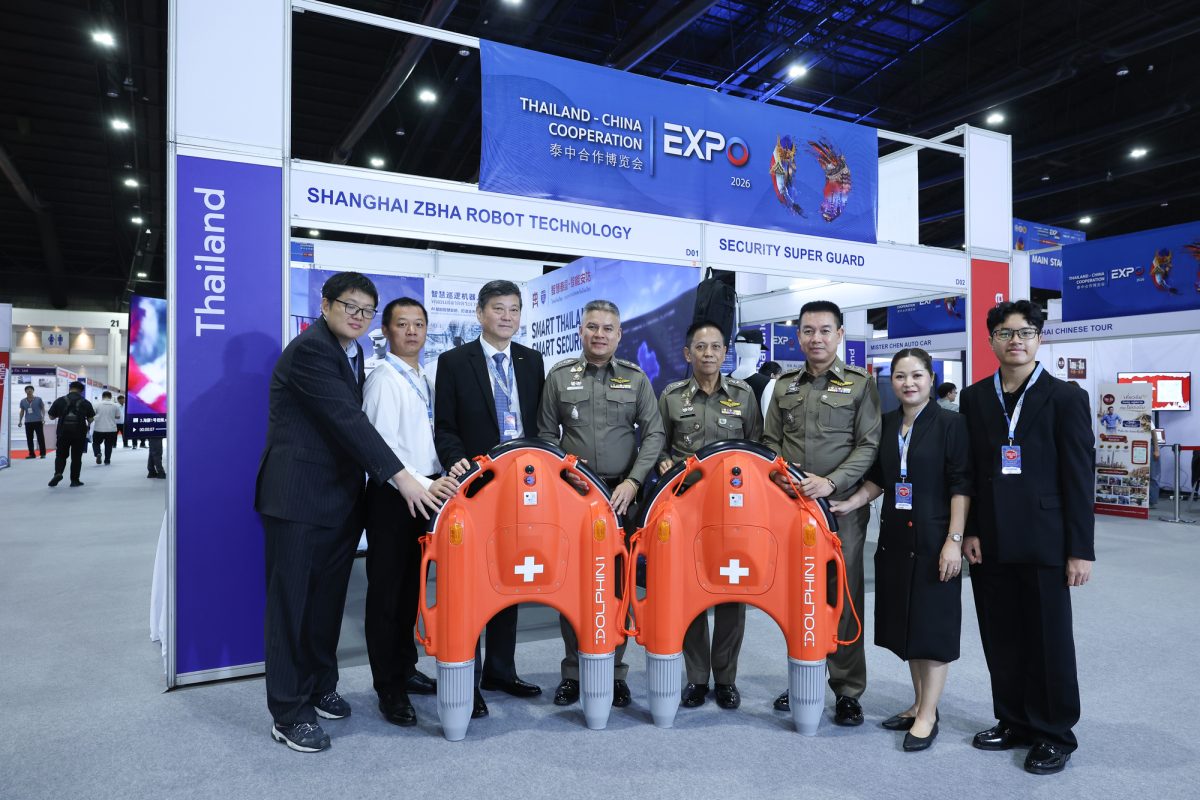
ZBHA International Limited, a developer of robotics and artificial intelligence (AI) technology for public safety, has partnered with Super Guard Security Co., Ltd., a leading Thai security systems provider with more than 19 years of experience, to deliver the "Dolphin" water rescue robot to Cherng Talay Police Station in Thalang District, Phuket. The deployment marks the first time robotics, AI systems, sensors, and detection cameras have been used to support law enforcement operations in Thailand. A second Dolphin unit is scheduled for delivery to Pattaya City Municipality next week.
Autonomous Operation, No Manual Command Required
Shaped like the stern of a boat, Dolphin travels across the water's surface at speeds of up to 7 meters per second (roughly 420 meters per minute) and can carry loads of up to 1,000 kilograms. It connects automatically to CCTV systems and detection sensors — as soon as the system identifies a drowning incident, the robot deploys automatically and heads directly toward the person in distress without waiting for a command from personnel.
Dolphin is available in two main models: Dolphin1, designed to be thrown into the water for immediate use in areas with heavy tourist boat traffic, and Dolphin3, which connects to a full AI platform and operates automatically alongside the entire surveillance system.
Kong Xianming, President of ZBHA International, said that water rescue efforts have traditionally relied on equipment such as life rings and manual labor, which limit both efficiency and response speed. Dolphin, he said, was designed to operate intelligently — reaching victims, returning them automatically, and connecting to a network for real-time risk monitoring. The AI system powering the device is a technology that can be deployed in regions around the world, under the concept of "Smart Thailand, Smart Security."
Beyond Dolphin, the company is also developing a patrol robot called "Patrol" for indoor and outdoor building surveillance, particularly during nighttime hours when human personnel coverage may be limited. All operations can be controlled through the AI system in conjunction with a Control Room staffed by monitoring personnel, as technology and human oversight are designed to work in tandem.
From 12 Drowning Deaths a Year to AI-Assisted Prevention
The coastal area under the jurisdiction of Cherng Talay Police Station spans a wide stretch of shoreline. In the past, the area recorded an average of approximately 12 drowning deaths per year, each representing losses of no less than 1 million baht — not including the impact on tourism confidence. Local authorities, together with the Cherng Talay Subdistrict Administrative Organization, previously introduced a manual surveillance system using ATV patrols alongside lifeguard teams, which succeeded in reducing the death toll to zero over the past year. However, manual surveillance still faces coverage limitations, particularly in high-risk areas with dangerous rip currents that pose a threat even to experienced swimmers and lifeguards. Bringing in AI and robotics technology represents an important step toward more comprehensive safety coverage.
Police Colonel Ekkarat Plaiduang, Superintendent of Cherng Talay Police Station, Thalang District, Phuket, said the area previously recorded an average of 12 drowning deaths per year. In response, the station partnered with Manoch Panchalad, President of the Cherng Talay Subdistrict Administrative Organization, to launch an ATV patrol system alongside lifeguard teams, which reduced deaths to zero over the past year. Manual surveillance, however, still has coverage gaps, particularly in areas with dangerous rip currents. The Dolphin robot, delivered through the ZBHA-Super Guard partnership, is expected to significantly enhance lifesaving capabilities — especially once it can be connected to CCTV systems for fully automated 24-hour operation in the future.
Expansion Plans for Pattaya and Beyond
Police Colonel Sukree Sinyen, Chairman of the Advisory Board of Super Guard Security Co., Ltd., said Super Guard is committed to bringing advanced security technology into Thailand to raise the country's security standards to international levels, while working alongside government and private sector partners to protect lives and property. The partnership with ZBHA aims to enhance safety for tourists, students, and foreign business travelers visiting Thailand, which currently welcomes more than 11 million tourists per year. Strengthening security, he added, is a key part of building confidence in the country.
Following the delivery to Cherng Talay Police Station, Super Guard and ZBHA are scheduled to deliver another Dolphin unit to Pattaya City Municipality next week — another major tourist destination in the country. The companies aim to eventually expand deployment to all 11 police stations across Phuket, before extending the program to other tourist provinces nationwide in the long term, with Patong Beach identified as the next target area. The ultimate goal is to reduce drowning deaths to zero across all of Thailand's tourist destinations.