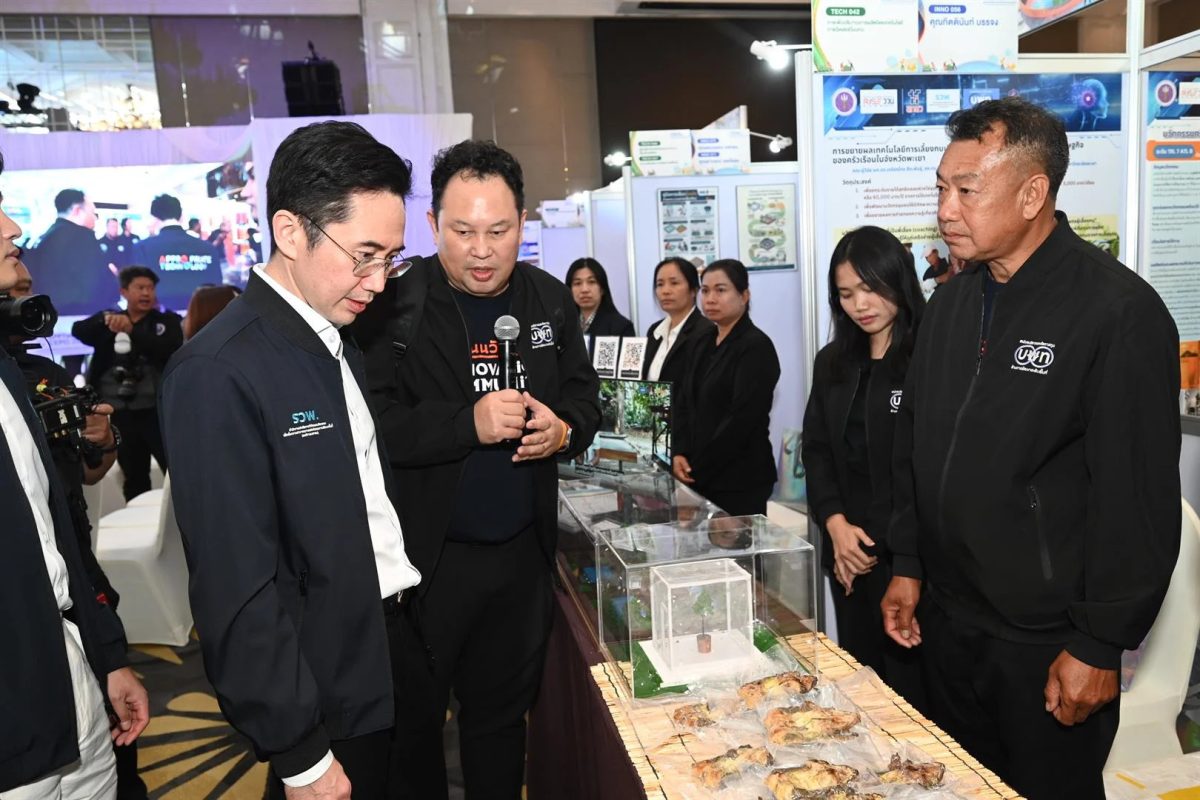
The event was organized by the Program Management Unit on Area-Based Development (PMU A) under the Office for Research and Innovation Acceleration for Competitiveness and Area-Based Development (Public Organization). It served as a platform for showcasing research and innovation that promote the application of Appropriate Technology to improve people's quality of life and strengthen sustainable grassroots economic development. The event also encouraged the transfer of research outcomes for practical implementation while fostering collaboration among researchers, government agencies, the private sector, and local communities.
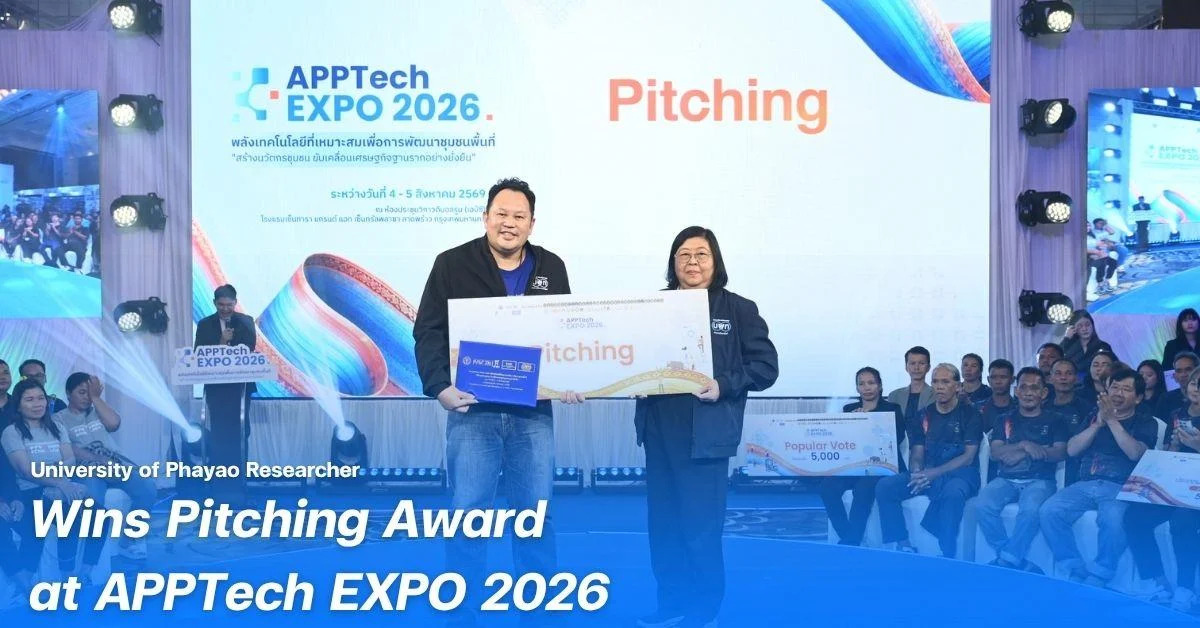
During the exhibition, Dr. Warach Madhyamapurush presented the research project through both an exhibition booth and a final project presentation (Pitching). The project focuses on developing systematic farm management practices for Nile tilapia farming in Phayao Province by promoting the adoption of appropriate technologies in aquaculture production and strengthening farmers' management capabilities. The initiative aims to improve production efficiency, enhance product quality, and increase farmers' incomes through practical and sustainable farm management approaches. The project covers collaborative activities involving both Nile tilapia and catfish farming communities.
Receiving the Pitching Award highlights the project's success in translating academic research into practical solutions that address local challenges and support community development. By integrating appropriate technologies with community participation, the research contributes to enhancing farmers' capabilities, increasing the value of local agricultural production, and strengthening the competitiveness of community-based aquaculture.
This achievement further reflects the University of Phayao's commitment to advancing research and innovation that generate tangible societal benefits. Through collaborative efforts among higher education institutions, government organizations, and relevant stakeholders, the University continues to promote research utilization, strengthen grassroots economies, empower local communities, and improve the quality of life of people in a sustainable manner.