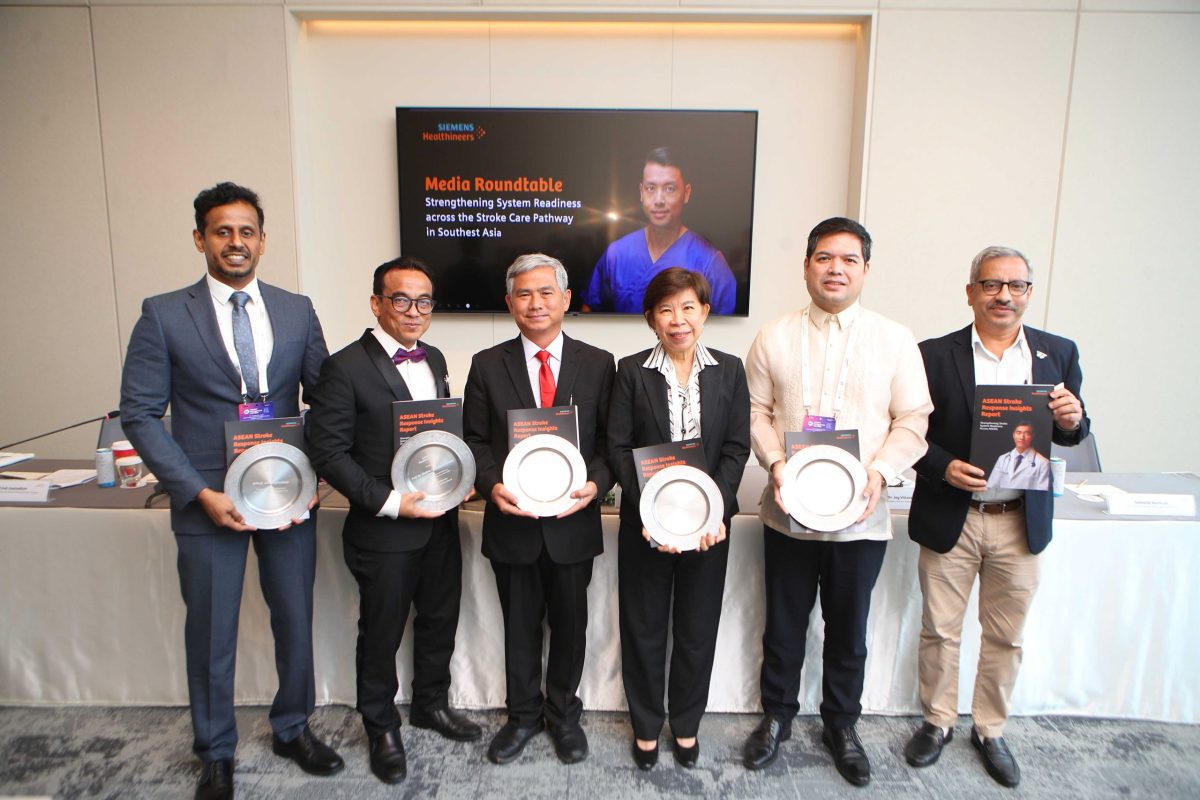
Delays occurring before patients reach stroke centres remain a major barrier to timely treatment across Southeast Asia, according to a new report, Strengthening Stroke System Readiness Across ASEAN, unveiled today by Siemens Healthineers at Hospital Management Asia 2026 in Bangkok, Thailand.
The report draws on insights from seven leading experts across Indonesia, Malaysia, the Philippines, Singapore, Thailand and Vietnam, including two senior Thai stroke specialists from Siriraj Hospital. Experts identified some of the most significant delays at the pre-hospital stage - where low public awareness slows response to symptoms - and during inter-facility transfers to a comprehensive stroke centre, where geographic distance and fragmented referral pathways can prevent patients from reaching the right level of care quickly enough.
The World Health Organization's South-East Asia Region accounts for over 40% of global stroke mortality, and the region carries nearly half of the developing world's total stroke burden, with severe long-term disability affecting roughly one-third of all stroke survivors. In Thailand, stroke remains the second leading cause of death, with a disability rate of around 60% among those affected. Thailand's stroke burden is compounded by an ageing population and continuing disparities in access to specialist care between Bangkok and the provinces.
"Every healthcare system across Southeast Asia is at a different stage of its stroke care journey, yet many of the challenges are shared," said Fabrice Leguet, Managing Director ASEAN and Head of Enterprise Services Asia-Pacific & Japan, Siemens Healthineers.
"Here in Thailand, that means both a wider network of stroke centres reaching beyond the major cities, and a stroke system that works together as one, from recognising symptoms and activating emergency medical services to rapid diagnosis, treatment and rehabilitation," said Chris Poray, Managing Director, Thailand, Siemens Healthineers.
Delays across the stroke pathway remain the greatest challenge in Thailand
Thailand has made considerable progress in stroke care over the past decade, establishing a nationwide Stroke Service Plan under the Ministry of Public Health, supported by the National Health Security Office, ThaiEMS 1669 and an expanding network of primary, intermediate and comprehensive stroke centres. Yet outside the major cities, access to comprehensive stroke care remains limited.
Findings pointed to transportation delays, with transfer times of one to two hours to reach the nearest comprehensive stroke centre and limited public awareness of the FAST warning signs as key barriers to timely treatment. Earlier activation of EMS and alongside addressing workforce shortages - particularly of vascular neurologists and neuroradiologists outside Bangkok, and non-neurologist physicians at referring hospitals who need additional training and support - present further barriers.
A national model with local innovation
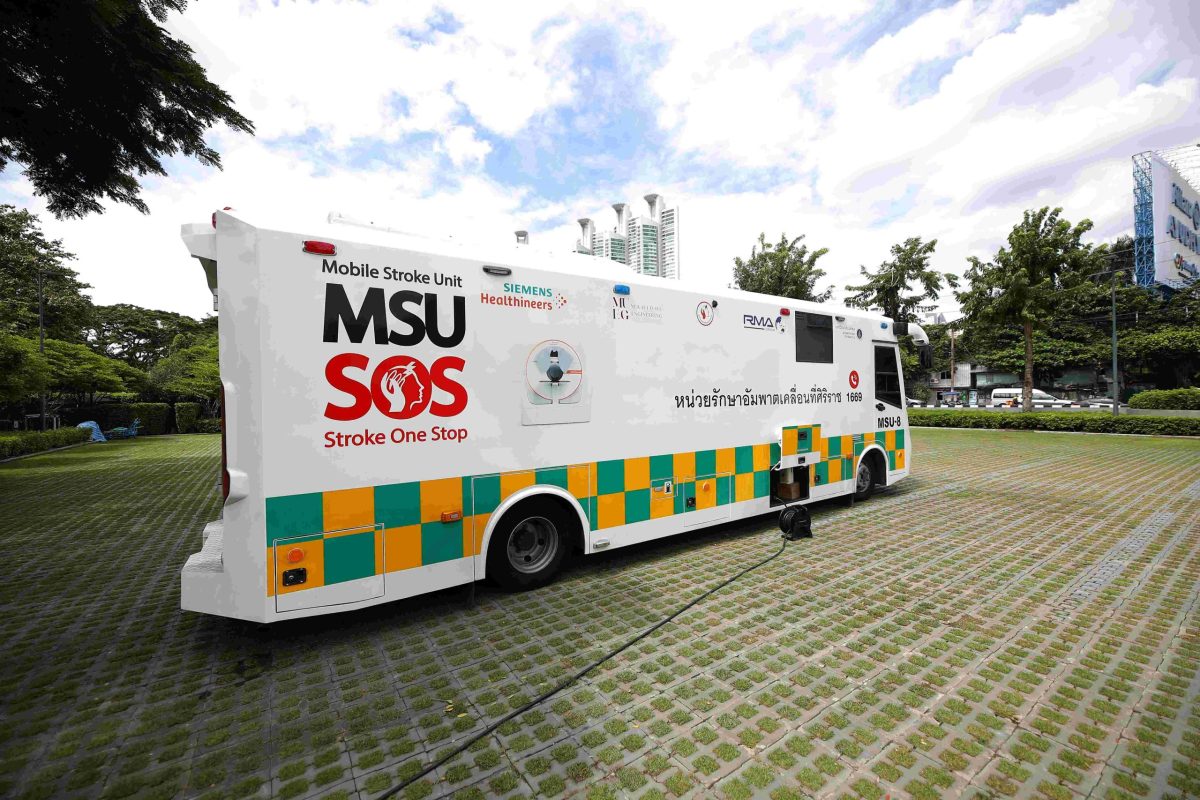
Siriraj Hospital has developed one of Thailand's leading comprehensive stroke programmes, providing 24/7 acute stroke services, advanced neuroimaging, stroke ICU care and multidisciplinary rehabilitation. It has also strengthened the pre-hospital phase through its Mobile Stroke Unit, known locally as Stroke One Stop (MSU-SOS), which operates around the clock and integrates EMS, telemedicine, AI-assisted stroke recognition and onboard CT imaging to diagnose stroke before patients even reach hospital.
Launched in 2018, the programme has treated more than 2,900 patients. Its most advanced unit, MSU-8, was developed through a collaboration between the Siriraj Stroke Centre, the Faculty of Engineering at Mahidol University, Siemens Healthineers and RMA Automotive. Experts identified expanding this kind of pre-hospital diagnosis, alongside a longer-term goal of a comprehensive stroke centre approximately every 60-80 kilometres and stronger inter-hospital referral systems, as priorities for Thailand.
AI can support faster, more coordinated stroke care
Artificial intelligence emerged as an important enabler of more connected stroke care in Thailand. Experts highlighted its potential to support earlier detection of stroke, prioritize urgent cases, support intelligent patient triage and optimise clinical workflow,s and extend specialist expertise through tele-stroke networks, particularly valuable in reaching patients outside Bangkok where there are workforce shortages. As across the region, experts stressed, that technology is most effective when integrated into well-designed clinical pathways and supported by trained professionals, robust referral networks and standardised care protocols.
Priorities for strengthening stroke readiness in Thailand
Alongside expanding infrastructure, experts agreed that strengthening stroke readiness in Thailand depends on the systems, workforce and technology that connect patients to timely treatment:
The report identifies five priorities for the region:
- Establishing a comprehensive stroke centre approximately every 60-80 km and building out inter-hospital referral systems
- Developing alert systems and AI-enabled tele-stroke support to help referring hospitals act quickly when patients show stroke symptoms
- Creating support systems that help physicians to speed up treatment decisions and reduce triage delays
- Improving training and support for non-neurologist doctors at referring hospitals
- Strengthening EMS activation and public recognition of the FAST warning signs
"Stroke care depends on a chain of decisions and actions that begins before a patient reaches hospital. No single institution or technology can strengthen that chain alone," said Poray. "Technology like the Mobile Stroke Unit works because it brings different partners together, and Thailand needs that same kind of collaboration to build out its network of stroke centres and referral pathways across the country."
"When it comes to stroke, every minute matters. At MedPark, our multidisciplinary team works seamlessly across emergency care, neurology, diagnostic imaging, intervention and critical care, supported by advanced technology and rapid clinical decision-making. Our priority is to ensure that every patient receives the right care at the right time, with the best possible chance for a better outcome," said Dr. Maiyadhaj Samsen, MedPark Hospital.