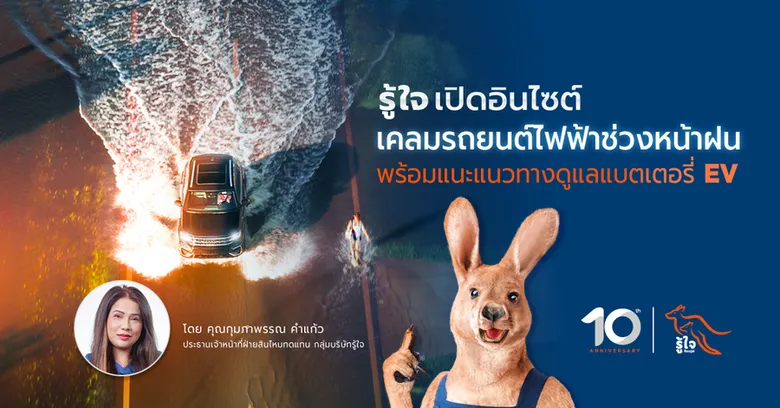
While modern EVs are engineered with advanced safety features and water-resistant battery systems designed to operate safely in wet conditions, severe flooding and road accidents can still result in hidden damage to battery packs and high-voltage electrical systems that may not be immediately visible.
Drawing on its claims experience and insights from its repair partner network, Roojai is sharing practical guidance to help consumers better understand battery-related risks, make informed decisions, and protect their vehicles during Thailand's rainy season.
Flood Exposure and Wet-Road Accidents Remain Key Risks
Thailand's rainy season brings increased risks from heavy rainfall, flooding, reduced visibility, and slippery road conditions. While EVs are designed to operate safely in wet environments, severe flooding and high-impact collisions can still affect battery systems and high-voltage electrical components.
Because damage to battery and electrical systems may not always be immediately visible following a flood event or major collision, Roojai recommends that EV owners arrange a professional inspection whenever their vehicle has been exposed to significant flooding or involved in a serious accident. This can help identify potential issues early and ensure both vehicle safety and long-term performance.
When assessing flood-related EV claims, Roojai follows applicable Office of Insurance Commission (OIC) guidelines, together with vehicle manufacturer repair protocols and safety recommendations. Particular attention is given to potential battery exposure to water and the integrity of high-voltage electrical systems, helping ensure that every claim is assessed according to appropriate safety and technical standards.
EV Repairs Can Be More Complex and Costly
One of the key differences between EVs and conventional internal combustion engine (ICE) vehicles is repair complexity and cost.
Based on Roojai's claims experience, average EV repair costs are approximately 40% higher than comparable ICE vehicles. This is driven by factors such as high-value battery systems, specialised repair procedures, advanced electronics, diagnostic equipment, and the need for EV-certified technicians.
Ms. Kumphaphan Kumkaew, Group Chief Claims Officer at Roojai, said: "As EV adoption continues to grow in Thailand, drivers should be aware of the increased risks associated with flooding and wet-road accidents during the rainy season. While modern EVs are designed to operate safely in wet conditions, battery and high-voltage system damage may not always be immediately visible following flood exposure or a major collision. Having the vehicle professionally inspected after such incidents, together with following manufacturer recommendations such as maintaining an appropriate charging routine, can help preserve battery performance and enhance long-term vehicle safety. For everyday driving, many manufacturers recommend charging the battery to around 80% to help maintain its State of Health (SOH)."
"Another common misconception is that battery damage automatically means the entire battery pack must be replaced. In reality, many cases can be safely and effectively repaired by replacing only the affected battery modules or components, depending on the nature of the damage and manufacturer guidelines. Our priority is always to ensure customer safety while identifying the most appropriate and cost-effective repair solution for each individual case."
Practical Tips for EV Owners During the Rainy Season
Roojai recommends EV owners:
- Avoid driving through deep or fast-moving floodwater whenever possible.
- Arrange a professional inspection after significant flood exposure.
- Monitor warning lights and battery performance following flooding or collisions.
- Follow the manufacturer's recommended charging and maintenance practices.
- For everyday driving, many manufacturers recommend charging to approximately 80% to help preserve battery State of Health (SOH).
- Ensure repairs are performed by qualified EV technicians.
- Review insurance coverage to ensure battery protection is appropriate for their needs.
The Importance of Comprehensive EV Insurance
As EV adoption continues to grow in Thailand, battery protection is becoming an increasingly important consideration for vehicle owners.
Because the battery is typically the most expensive component of an EV, appropriate insurance coverage can help protect owners from unexpected repair or replacement costs. Comprehensive EV insurance and battery protection options can provide greater financial security and peace of mind, particularly during Thailand's rainy season when flood and accident risks tend to increase.