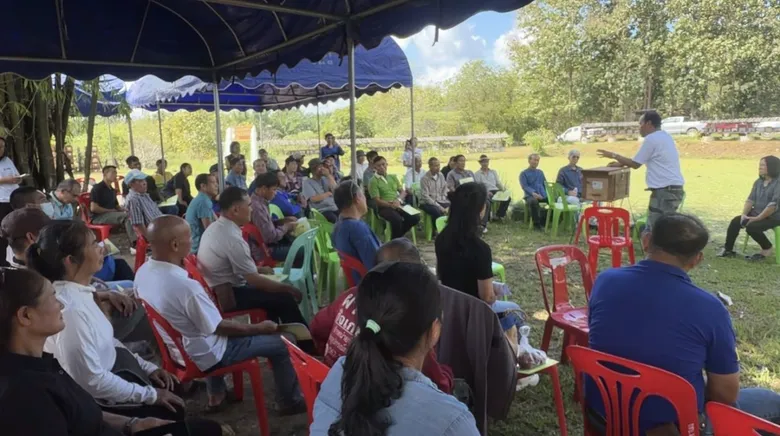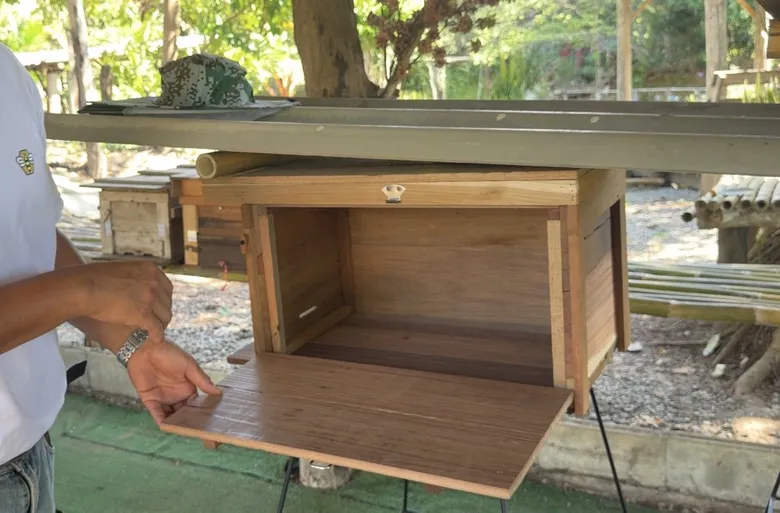
The training covered honey bee biology, hive management, and appropriate beekeeping techniques. Asst. Prof. Dr. Tipwan Suppasat, a lecturer at the School of Science, University of Phayao, and project leader, together with Mr. Prasert Hanphisut, a community innovator and model farmer, demonstrated an improved Thai native honey bee hive. The innovation features thicker wooden walls to maintain stable temperatures, a stronger structure for durability, and side inspection openings that allow farmers to monitor hive conditions and plan harvesting more effectively. The training equips farmers with practical, research-based knowledge and technologies that can be applied to their agricultural activities to generate additional income.
The University of Phayao is committed to delivering academic services and research innovations that create tangible benefits for local communities. Beyond promoting beekeeping as a supplementary occupation, the project encourages community enterprises to process honey and beeswax into higher-value products, such as honey soap, skincare products, and beeswax-based goods. This approach aims to diversify household income, add economic value to local resources, and strengthen community resilience. The project targets a 20% increase in income for 20,000 farming households within two years through appropriate and modern technologies, supporting sustainable livelihoods and long-term community development.