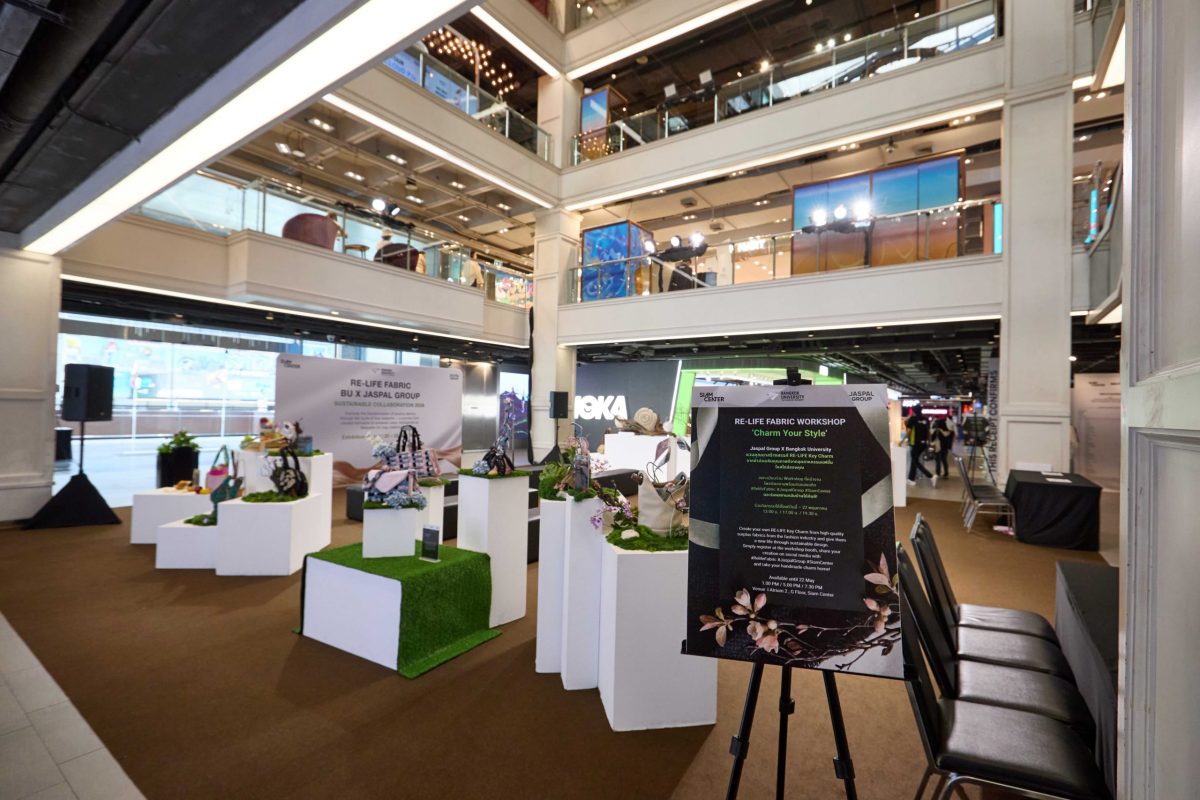
Jaspal Group, one of the region's leading retail fashion and lifestyle groups, reaffirmed its commitment to shaping a more sustainable future for fashion through "RE-LIFE FABRIC: BU x JASPAL GROUP SUSTAINABLE COLLABORATION 2026", a creative collaboration with the School of Fine and Applied Arts, Bangkok University. The project invited young designers to reinterpret quality surplus fabrics from Jaspal Group's fashion production process and transform them into creative bag designs, reflecting the potential of design to give new value to materials while inspiring a more socially and environmentally responsible future for Thai fashion.
The RE-LIFE FABRIC project was developed from the idea of bringing quality surplus fabrics from Jaspal Group's portfolio of brands back into the creative process. Through the perspectives of third-year students from the Fashion Design Department, School of Fine and Applied Arts, Bangkok University, the materials were reimagined as contemporary fashion pieces with both function and meaning. As part of the Fashion Management & Entrepreneurship course, the project gave students hands-on experience working with a leading fashion company, designing within real-world material constraints and deepening their understanding of sustainable design. It also reflects Jaspal Group's belief in "The Power of Next", supporting the potential of the new generation to help drive Thai fashion forward with creativity, responsibility and purpose.
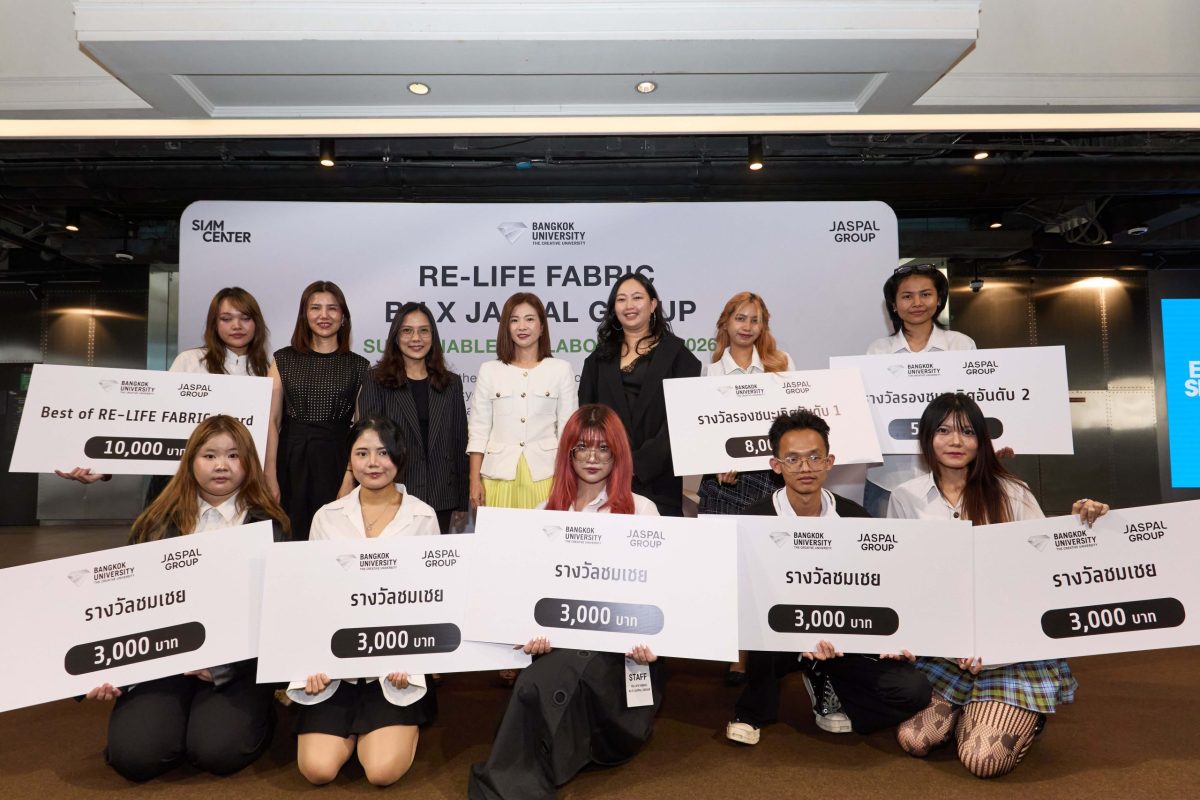
As part of the project, scholarships were presented to outstanding works in recognition of the students' creativity and potential. The winning team received a scholarship of 10,000 baht, while the first runner-up and second runner-up received 8,000 baht and 5,000 baht, respectively. The judging panel included Assistant Professor Dr. Natsupa Charoenyingwattana, Associate Dean of the Faculty of Fine and Applied Arts, Bangkok University, Pridsadee Sillapasom ,Visual Merchandise Department Manager, Jaspal Group.
The winning team, "Peejayu", drew inspiration from the soft and serene qualities of Jaspal Group's surplus fabrics, which evoked the feeling of snow in winter. This led to the concept of crocus flowers blooming in the cold — a symbol of resilience and quiet growth. Inspired by the philosophy of Kaizen, or continuous improvement, the team translated the idea of a "winter garden" into a bag design that reflects beauty amid challenges and the belief that sustainability can grow steadily through small, meaningful steps. Through the project, the team gained valuable lessons in systematic teamwork, experimentation, problem-solving and design development, while broadening their view of fashion beyond aesthetics to include functionality, creativity and environmental responsibility.
The first runner-up, "Dee Mak Loei", explored the value of quality surplus fabrics that, despite their faded tones, retained a quiet beauty of their own. Drawing from the Japanese art of Ikebana and the philosophy of Wabi-sabi, which finds beauty in imperfection, the team created a piece of wearable art inspired by the form of an Ikebana vase. The structure, negative space and folds of the bag were designed to tell a story of spring and new beginnings. The project helped the team realise that good design is not defined only by the material itself, but also by intention, dedication and responsibility throughout the creative process.
The second runner-up, "I LOVE MY JOB", began with a question around agricultural waste and produce that is discarded simply because it does not meet commercial standards, despite still having usable potential. The team set out to turn what is often seen as "waste" into something with new life and value. Fruit peels were processed and blended with gelatin to develop a new textile-like material, which was then combined with quality surplus fabrics from Jaspal Group. The resulting bag design, inspired by a fruit basket, reflects the cycle of production, consumption and reuse. The project offered the team a fresh perspective on how design can support sustainability and provided an opportunity to learn from working with one of Thailand's leading fashion companies.
The collaboration gave young designers a platform to present original bag designs while underscoring the strong partnership between industry and academia in developing future fashion talent. By combining fashion management, creative design and sustainability, RE-LIFE FABRIC shows how quality surplus fabrics can be transformed into functional works of art — and how purposeful creativity can help shape a more sustainable fashion future.